Solutions · Critical communications
Mission-critical communications
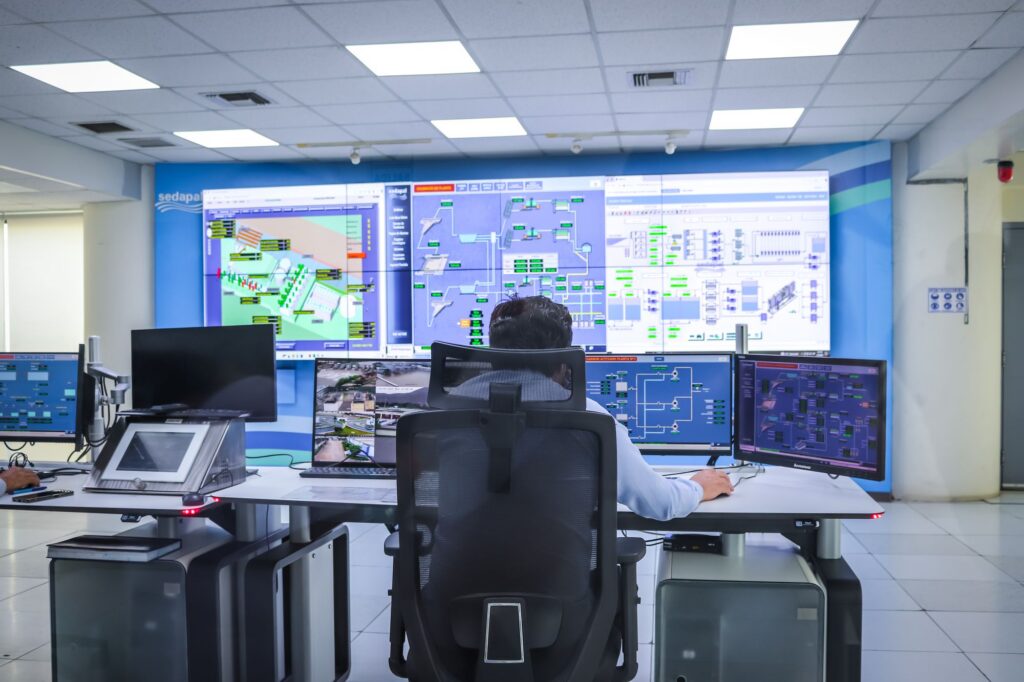
Critical communications means telephony, contact centre and alarms built to withstand faults and power cuts. For organisations that cannot afford downtime, we build in redundancy and backup routes, and we monitor and test them.
What we do
Built to withstand faults
In healthcare, in a municipality’s switchboard and in organisations with on-call services and alarms, an outage can have serious consequences. That calls for telephony that is built to withstand faults and recover quickly, and a partner who knows what is at stake.
By mission-critical communications we mean resilient telephony, contact centre and alarms, not radio systems such as Rakel, the Swedish emergency services radio network. We have long experience of Mitel’s larger PBXs, such as MX-ONE and OpenScape, and help organisations that cannot afford downtime with redundancy, monitoring and support within agreed timescales.
What’s included
- Review of dependencies and risks
- Redundancy and geo-redundancy where your organisation needs it
- Backup routes via several operators, and local survivability
- Monitoring of nodes, trunks, SBCs and certificates
- Scheduled failover tests and exercises together with you
- Agreed response and resolution times (SLA) and out-of-hours support, tailored to your organisation’s needs
Benefits
What you get
High availability
The solution is built to keep working even when part of it fails.
Tested backup routes
Backup routes are tested in scheduled windows, so that weaknesses are found and fixed before they are needed.
Input for your planning
Dependency map, test reports and documentation to support your continuity planning.
Help within agreed timescales
You know who to call when something happens, and we know your environment.
Building blocks
Building blocks for resilient telephony
Geo-redundancy
PBX nodes in different locations, so that telephony keeps running if a data centre goes down. OpenScape 4000, OpenScape Voice and MX-ONE support this.
Local survivability
Branch offices and hospitals can keep making calls when the link to the central site is lost. This also works in Teams, where an on-site SBC keeps calls going in survivable mode.
Multiple operators
SIP trunks, in other words phone lines over the internet, from operators that are genuinely separate, ideally via different physical routes and with both fixed and mobile access.
Backup power
Uninterruptible power supply (UPS) and backup power, not only in the data centre but also for the network switches that power the phones, for the SBCs and for the base stations of the wireless DECT phones.
Monitoring
Nodes, trunks, SBCs, queues and certificates are monitored, with alerts to whoever is on call.
Testing and exercises
Failover tests in scheduled windows, and exercises together with your organisation. Whether emergency calls to 112 get through is checked together with the operator and SOS Alarm, which answers 112 calls in Sweden.
Alarms and paging
Alarms that reach the right person with OpenScape Alarm Response, and DECT from Ascom and Mitel.
Recording
Call recording where your organisation needs it, protected and with the right retention period.
Products
Products we work with
Product
Mitel OpenScape Voice
The SIP platform for large and distributed environments, with redundancy.
Product
Mitel OpenScape Alarm Response
The alarm server that sends alarms to the right person by phone, DECT, SMS and app, and escalates if nobody acknowledges them.
How we work
From the first conversation to day-to-day operations
01
Discovery
We review how you work today, which systems you have and what you want to achieve.
02
Proposal
You receive a concrete proposal covering technology, timeline and cost, and we explain our choices.
03
Implementation
We install, integrate and test, and we train your users and administrators.
04
Operations and support
After go-live, we stay with you for support, updates and further development.
Common questions
Frequently asked questions about mission-critical communications
Is geo-redundancy a legal requirement?
No, not in general. Each organisation decides how much redundancy it needs, based on its own risk analysis.
Are two operators enough?
Only if they are genuinely separate: different networks, staff and subcontractors. Two brands owned by the same operator give you no real backup.
How long should backup power last?
In Sweden, there is no general requirement for organisations that use telecoms services. Start from how long your organisation can tolerate an outage, and remember the phones, switches and SBCs, not just the servers.
How often should we test the backup routes?
No Swedish law says how often. The Swedish Post and Telecom Authority (PTS) and the Swedish Civil Defence and Resilience Agency say that backup solutions should be tested and practised. Common practice is at least once a year and after major changes.
Will 112 calls work if the PBX switches to fallback mode?
That needs to be checked. In Teams survivable mode, for example, no location information is sent with emergency calls, and emergency numbers may need a route of their own. That is why the route for 112 is checked at every failover test, together with the operator and SOS Alarm.
Further reading
Guide
Redundancy and failover for telephony
Dependencies, backup routes and how to test that continuity holds.
Industry
Healthcare
Phone lines that patients can get through on, built for 24/7 operation, with changes that are planned and tested.
Industry
Municipalities and regions
Reliable communications for services that must always be reachable, with a focus on security, GDPR and clear contracts.
Solution
Support contracts and managed services
Support contracts with agreed response times, so that your communications work every day.
Solution
PBX and telephony
Delivery, upgrades and operation of PBXs from Mitel and Alcatel-Lucent Enterprise, such as MX-ONE, OpenScape and OmniPCX Enterprise.
Solution
PBX migration
From an old PBX to a new platform or Teams, step by step, with a rollback plan for every stage.
Let’s talk about your communications
Tell us where you stand today with your PBX, Teams or contact centre, and we will come back to you with a proposal. It costs nothing to ask.